The popular advice is to choose the competitor monitoring software with the longest feature list. That approach usually creates a bigger problem: your team collects more signals than it can interpret. An SEO team may need ranking, backlink, and content-gap alerts. An agency may need multi-client reporting and approvals. An e-commerce team may care more about price and stock changes than search visibility.
The better question is which competitive signal can your workflow act on. This comparison evaluates each platform by the signal it monitors, alert quality, integrations, pricing transparency, implementation effort, and best-fit user. Use it alongside a practical guide to competitor analysis to find market gaps before committing to a monitoring stack.
AutoSEO is the featured option for teams that want competitor alerts inside a broader SEO workflow, including research, content, technical fixes, publishing, rank tracking, and AI-visibility measurement. Semrush and Similarweb reach further into market and channel intelligence, while Crayon and Klue are stronger for formal competitive intelligence and sales enablement. Visualping, Owler, and Prisync solve narrower monitoring problems with less strategic overhead.
Table of Contents
- 1. AutoSEO
- 2. Semrush
- 3. Similarweb
- 4. Ahrefs
- 5. SpyFu
- 6. Crayon
- 7. Klue
- 8. Visualping
- 9. Owler
- 10. Prisync
- Top 10 Competitor Monitoring Tools Comparison
- Choose the Monitoring Layer Your Workflow Can Use
1. AutoSEO
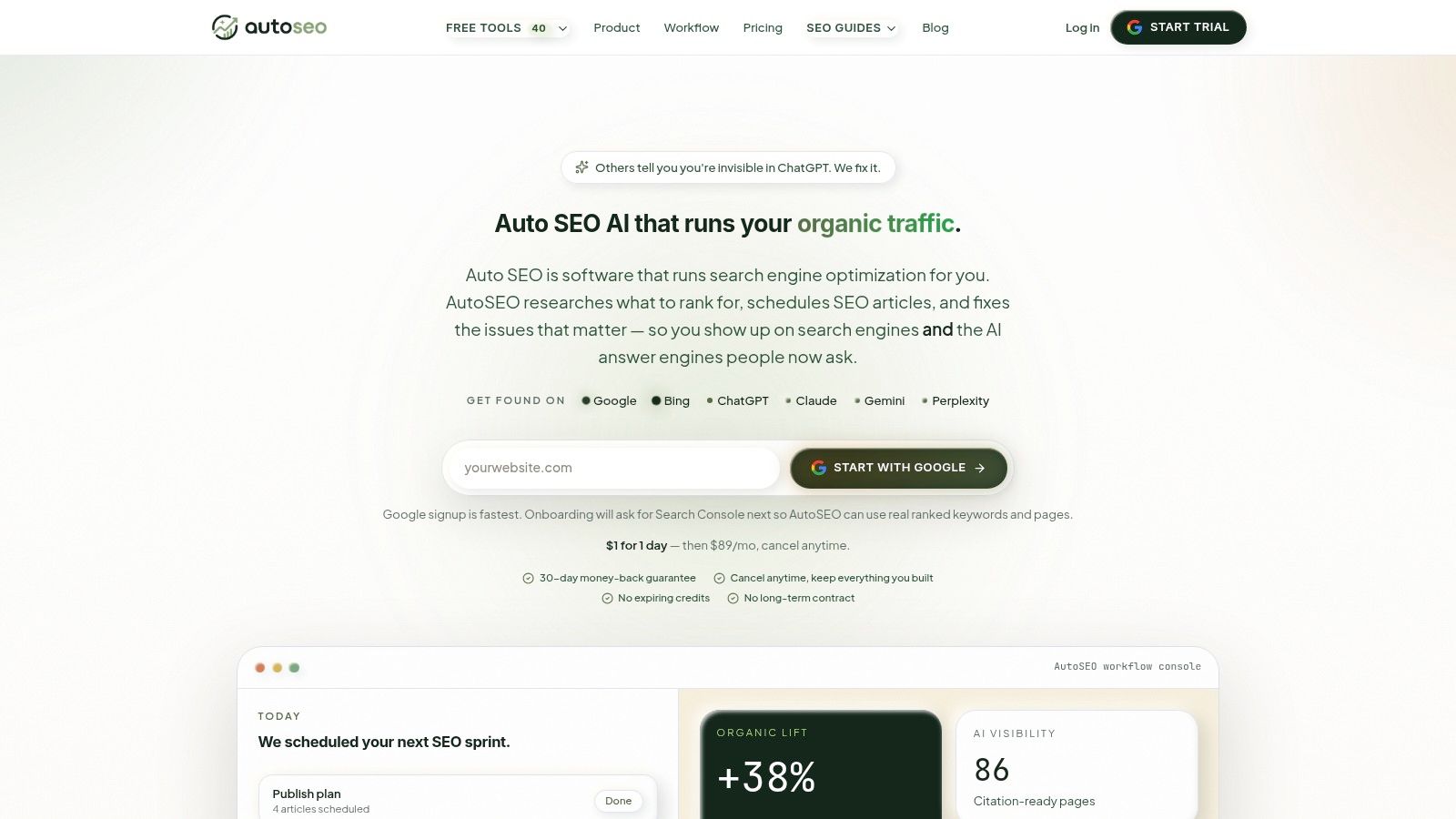
AutoSEO treats competitor monitoring as an execution loop, not a standalone research dashboard. It combines competitor crawling, content-gap analysis, backlink checks, real search data, technical audits, publishing, rank tracking, and AI-visibility measurement. For an SMB or agency, this connection matters because an alert can become an assigned task, a published response, and a measurable follow-up rather than another item in a research queue.
The platform connects to Google Search Console, uses DataForSEO as a fallback, and crawls sitemaps and competitor sites. Intent and feasibility scoring support a 30-day publishing calendar. Its approval-first workflow lets a non-specialist review proposed changes before publication, while approved content can move to Shopify, WordPress, Webflow, Wix, custom sites, or webhooks without repeated copy and paste.
The signal AutoSEO prioritizes
AutoSEO focuses on search visibility gaps. It can identify competitor content opportunities, monitor backlink activity, prioritize technical SEO work, and track rankings alongside indexed pages and traffic signals. It also measures visibility across ChatGPT, Claude, Gemini, Perplexity, and Google AI Overviews. That tracking is included rather than sold as a separate add-on.
The distinction matters because traditional competitor benchmarking often centers on Google results. Coverage from Exploding Topics describes an AI visibility gap: tools built for conventional search may miss how rivals appear in generative answers (Exploding Topics explains the AI visibility gap). AutoSEO therefore suits teams that want conventional SEO and AI-answer visibility in one operating console.
Best fit: Choose AutoSEO when the same team must find a competitor gap, create the response, publish it, and check whether visibility changed.
Pricing and limitations
AutoSEO publishes clear pricing. A $1 one-day trial leads to Starter at $49 per month for one site, Pro at $89 per month per site, and Agency at $199 per month for five sites with white-label reports. Annual plans save approximately 35%, volume discounts are available, and the product offers a 30-day money-back guarantee. The AutoSEO website lists these figures. Its documented security posture includes GDPR alignment and TLS encryption, while SOC 2 remains in progress.
Per-site billing can become expensive for large portfolios. AI-generated content and automated fixes still require human review for brand accuracy and complex technical cases. The practical audience is e-commerce operators, startup marketing generalists, SEO managers, publishers, and agencies that prefer connected execution over several specialist tools. Teams assessing implementation details can review this SEO automation platform overview.
2. Semrush
Semrush monitors a wider competitive picture than a pure SEO crawler. Its Traffic & Market tools compare domain traffic trends, audience patterns, channel mix, and market positioning, while Competitor Monitoring keeps tracked rivals in a recurring workflow. The platform also supports competitor discovery, keyword and topic gaps, historical trend views, and custom competitor lists.
The signal Semrush prioritizes
Semrush is strongest when the signal is search visibility connected to broader channel intelligence. An SEO lead can compare keyword coverage and ranking movements, while a growth or marketing team can examine how a rival's estimated traffic mix changes across markets. That makes it more useful than a backlink-only platform when the question is not just “which page outranks us?” but “where does this competitor appear to be investing?”
The practical limitation is interpretation. Estimated traffic and market data can diverge in smaller niches, so teams should treat the output as directional intelligence rather than internal accounting data. The broad feature set also increases the risk of buying capabilities that a small team won't use.
Practical rule: Use Semrush when competitor monitoring needs to inform both SEO planning and market-level benchmarking.
Pricing is available through the Semrush pricing page, but the most useful competitive depth depends on the plan and modules selected. That makes total cost less transparent than a narrow tool with one clear monitoring function. Implementation is moderate. An experienced SEO team can start quickly, but agencies and larger organizations need disciplined competitor lists, naming conventions, reporting templates, and ownership.
Semrush serves SMBs with an active SEO function, agencies managing recurring client analysis, and enterprise marketing teams that need search and market context in one environment. It's a poor fit if all you need is a handful of page-change alerts or retail price changes. For reporting-focused teams, the SEO reporting tools guide offers useful workflow context.
3. Similarweb
Similarweb is built around market traffic, audience behavior, and channel movement. Instead of beginning with a page or backlink, it starts with the competitive position of a site or segment. Teams can review competitive traffic share, audience overlap, top pages and folders, search competitors, keyword gaps, and market trends. API access also makes the platform more suitable for organizations that want to feed competitive data into internal dashboards.
The signal Similarweb prioritizes
Its differentiator is breadth across sites and channels. A marketing strategist can use Similarweb to understand where competitors attract audiences, which sections appear important, and how market patterns shift. The platform also tracks AI chatbot traffic and GenAI visibility, giving teams a way to examine where generative engines send users and how competitors benefit from that channel.
This makes Similarweb valuable for decisions that sit above individual SEO tasks. It can help a SaaS company frame market movement, an agency build a client benchmark, or an enterprise team investigate channel mix across countries. It won't, however, replace a page-change tool or a specialized retail repricing system.
Similarweb's competitive analysis platform uses quote-based pricing, so buyers need to validate the full cost of the modules, seats, data access, and API requirements. Advanced functionality can be expensive, and estimates are less dependable for very small sites or hyper-local markets. Those limitations make a proof-of-value exercise important before procurement.
Implementation effort is higher than Visualping because the team must define markets, domains, audience segments, and reporting questions. Similarweb is best for enterprise strategy groups, market intelligence teams, mature agencies, and organizations with analysts who can translate directional traffic data into decisions. SMBs should choose it only when market-level intelligence is a genuine priority, not because the dashboard looks broader.
For teams specifically investigating generative search, pair its findings with a broader AI visibility tracking tools comparison.
4. Ahrefs
Ahrefs focuses on the signals SEO teams can act on directly: competitor backlinks, mentions, ranking movements, and competitive SERP changes. Its Alerts can monitor new and lost backlinks on competitor domains or URLs, web mentions by keyword, and rank movements. Domain comparison and a large crawler and backlink index support deeper investigation after an alert arrives.
A backlink alert has a clear operational path. The SEO manager can inspect the linking page, assess relevance, compare the competitor's content asset with the company's own coverage, and decide whether to pursue a similar editorial opportunity. That is more actionable than an undifferentiated traffic estimate, although it answers a narrower question.
Who should use Ahrefs
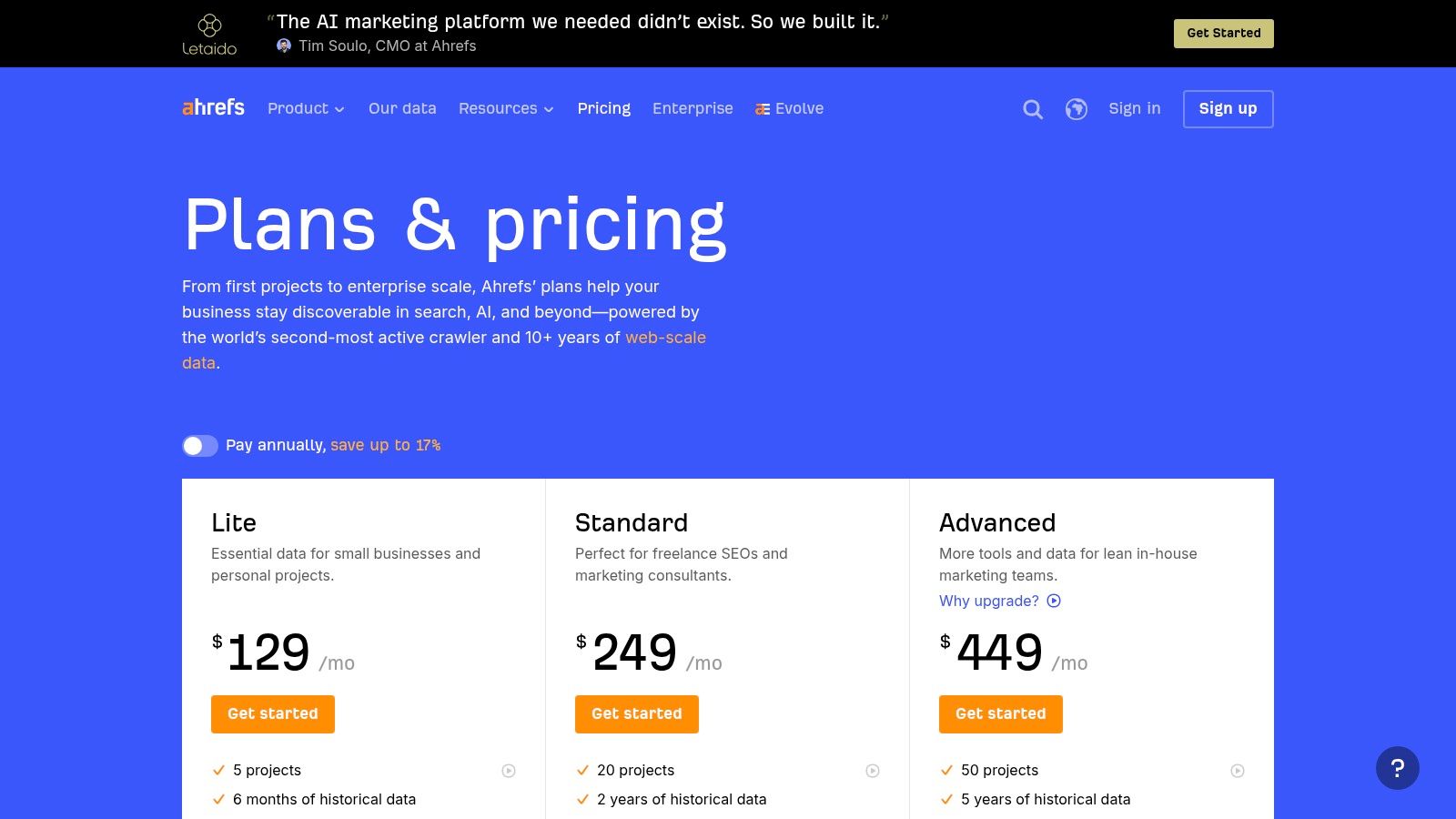
Ahrefs is a strong fit for in-house SEO teams, technical content teams, and agencies that need reliable link and SERP reconnaissance. Its public pricing improves budget planning compared with quote-only enterprise platforms. API access also helps agencies and larger teams connect data to custom reporting systems.
The limitation is scope. Ahrefs is primarily an SEO signal platform, so it won't provide the same broader traffic and channel-mix intelligence as Similarweb. It also won't serve a sales team that needs battlecards, a product marketer tracking competitor launches, or a retailer responding to stock changes.
Implementation is comparatively manageable for an SEO specialist. The harder part is alert governance. If every ranking movement or backlink event reaches a shared inbox, the team can create the same signal-to-noise problem seen across the category. A 2026 synthesis of competitive intelligence tool reviews found that irrelevant alerts were the most common shared complaint, even though roughly one in five reviewers reported no substantive complaints (the review synthesis details the alert-quality issue).
5. SpyFu
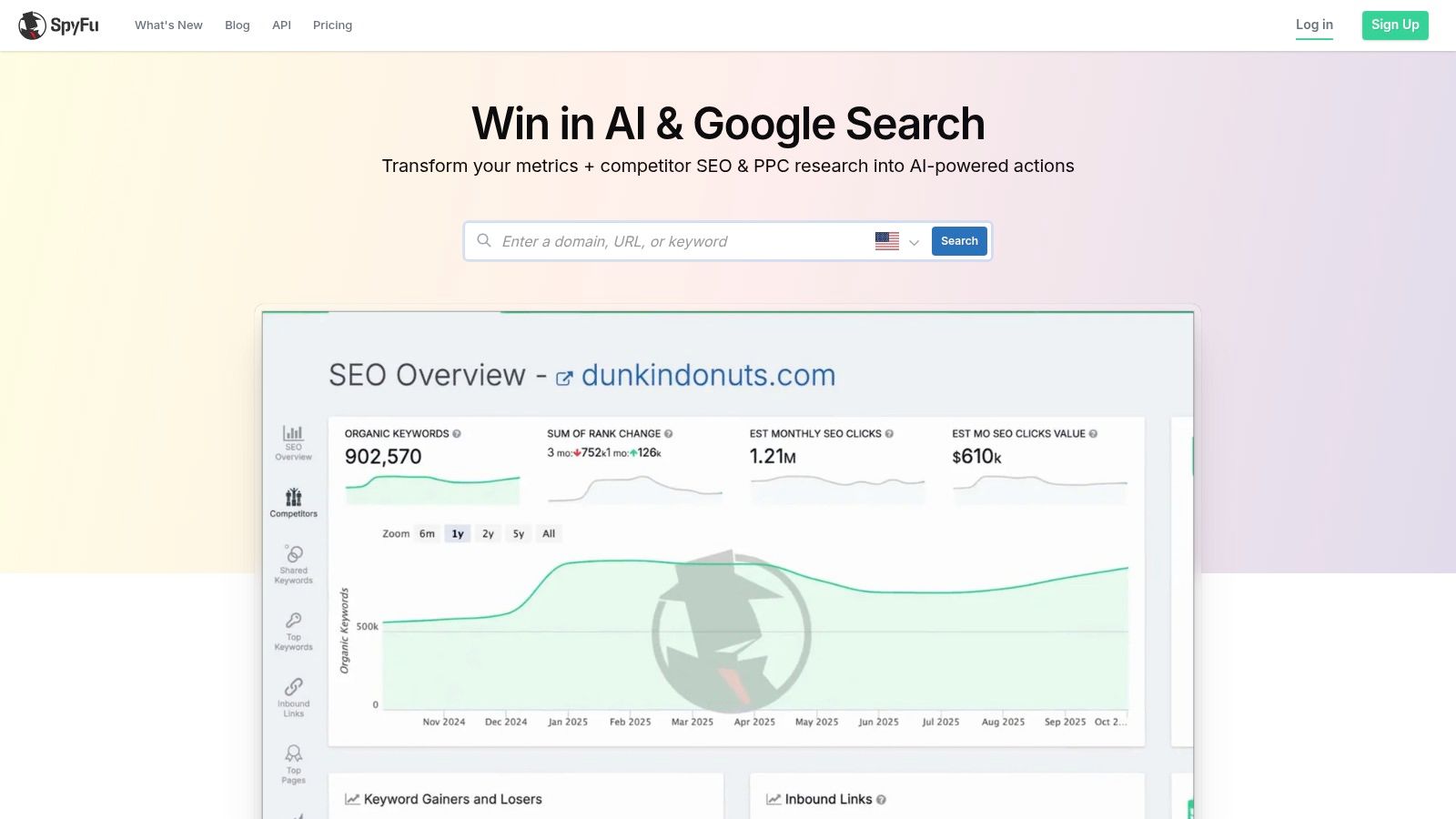
SpyFu is designed for Google search and paid-search reconnaissance. It tracks competitor Google Ads history, ad copy, keyword buying patterns, SEO competitor keywords, ranking pages, and ongoing organic and paid movements. Its value comes from quickly showing how a rival's search strategy is assembled, rather than from monitoring every possible market signal.
A PPC manager can use SpyFu to inspect recurring themes in competitor ad copy and identify keyword areas where rivals appear consistently active. An SEO specialist can use competitor keyword and ranking-page data to find coverage gaps. The output is best treated as directional intelligence, because estimated search and advertising data can vary.
The signal-to-workflow match
SpyFu fits an SMB or agency that wants practical competitive search intelligence without adopting a broad market-intelligence suite. It's especially useful when the immediate question is whether a rival is entering a paid-search theme, changing its messaging, or competing for an organic keyword cluster.
The platform's website explains its competitive search capabilities, including plan tiers with API credits and ChatGPT integration options. Pricing is easier to understand than quote-based enterprise systems, but buyers should still check which historical views, API allowances, and exports sit inside the selected plan. The tool has less coverage outside Google Ads and SEO, so it shouldn't be treated as a general company-monitoring or retail intelligence system.
Implementation is light for a specialist and moderate for an agency. The main work is deciding which competitors and keyword groups deserve recurring attention. If the team has no PPC or SEO owner, SpyFu can generate interesting research without producing a clear action queue.
SpyFu is the better choice for budget-conscious paid-search and SEO teams that need fast reconnaissance. It's less suitable for product marketing, sales enablement, or a retailer that needs verified price and inventory changes rather than search estimates.
6. Crayon
Crayon monitors the signals that a formal competitive intelligence program must distribute across an organization. It aggregates changes from competitor websites, pricing pages, product materials, marketing content, and sales collateral, then applies AI-assisted analysis and curation. The output isn't just an alert. It can become a digest, stakeholder report, or sales battlecard.
From raw changes to enablement
Crayon's strongest signal is competitor movement that affects revenue teams. A product marketer may need to understand a rival's new positioning. Sales leaders may need updated differentiation. Executives may want a concise view of market movement rather than a stream of page diffs. Crayon's structure is designed for that internal distribution layer.
That depth creates implementation work. The organization needs a CI or product marketing owner who defines monitored rivals, validates important changes, maintains taxonomy, and decides which insights deserve distribution. Without that process, the platform risks becoming an expensive archive of competitive material.
Pricing is quote-based through the Crayon website, and the platform is generally aimed at enterprise buyers. The lack of public pricing makes a direct comparison with SMB-focused tools difficult, so procurement should request a full cost view that includes implementation, users, integrations, and support.
Crayon makes the most sense for enterprise organizations with many stakeholders and a recurring need for formal intelligence. Agencies can use it for advanced client programs, but smaller agencies may find the governance model heavier than the problem requires. If the team only needs to know when a competitor changes a pricing page, Visualping will usually involve less effort and less interpretation overhead.
A monitoring platform creates value only after someone owns the decision that follows the alert.